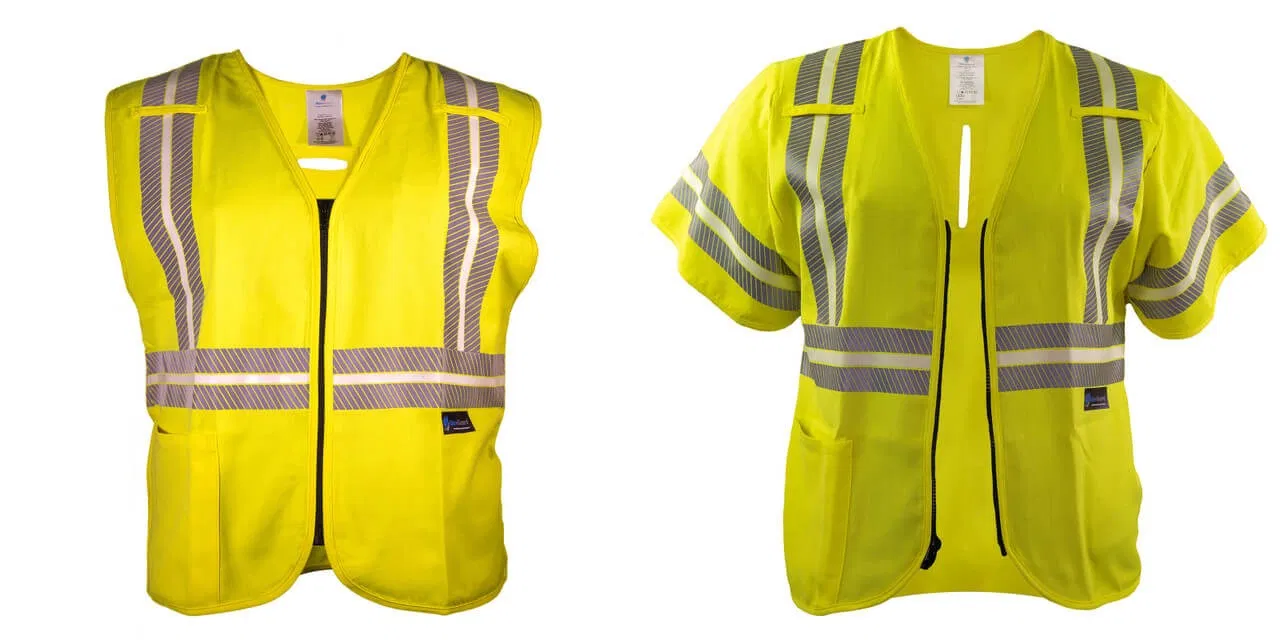
When working around electrical infrastructure, roadways, heavy equipment, or active construction sites, visibility is a critical part of worker safety. High-visibility safety vests help workers stand out from their surroundings, making it easier for drivers, equipment operators, and coworkers to recognize their presence.
But not all safety vests provide the same level of visibility. Traditional safety vests typically rely on fluorescent materials and reflective tape, while Advanced Visibility safety vests incorporate GlowGuard technology, which combines reflective properties with photoluminescent technology to provide an additional visibility feature in low-light and dark environments.
Available in Class 2 and Class 3 configurations, Advanced Visibility vests offer options for different work environments and visibility requirements.
So, what is the difference between Class 2 and Class 3 safety vests? How does GlowGuard technology work? And what makes Advanced Visibility vests different from traditional safety apparel?
Let's take a closer look.
GlowGuard is a visibility-enhancing technology featured in Advanced Visibility safety apparel. It combines reflective material with photoluminescent components that absorb and store light energy, then release that energy as a visible afterglow.
Unlike battery-powered lights, photoluminescent materials do not require batteries, wiring, or an electrical power source to produce their afterglow. Instead, they use previously absorbed light energy to remain visibly illuminated for a period after the surrounding light source is removed.
This adds another dimension to conventional high-visibility apparel.
Traditional reflective tape is designed to return light toward its source, helping workers become more noticeable when illuminated by headlights or other suitable light sources. GlowGuard combines this reflective function with an afterglow feature that can help make workers more noticeable when ambient lighting is limited.
GlowGuard technology works through three basic steps:
1. Absorbs light: Photoluminescent components absorb energy from natural daylight or artificial lighting.
2. Stores energy: The material retains the absorbed energy for gradual release.
3. Emits a visible afterglow: As surrounding light levels decrease, the material releases stored energy as a visible glow.
Because GlowGuard does not depend on a continuously powered light source, it can provide an additional visibility feature in environments where lighting conditions change throughout the workday.
Advanced Visibility's Class 3 product listing reports an afterglow duration of up to eight hours under its stated measurement conditions. Actual performance depends on factors such as charging-light intensity, exposure duration, and the time elapsed since charging.
For utility crews, electrical contractors, road maintenance personnel, and other workers who operate in changing light conditions, this technology provides an additional consideration when selecting high-visibility apparel.
The primary difference is how the garments help workers remain visible.
Traditional high-visibility vests generally use fluorescent background materials and retroreflective tape. Fluorescent materials help workers stand out in daylight and certain low-light conditions, while retroreflective materials return incident light toward its source.
Advanced Visibility vests featuring GlowGuard technology combine reflective material with photoluminescent components, adding a visible afterglow feature to the garment.
Here are five important differences to consider.
Traditional retroreflective tape relies on a suitable external light source to return light toward its source. Without sufficient illumination, its retroreflective properties alone cannot make the garment appear self-illuminated.
GlowGuard adds photoluminescent material that releases previously absorbed light energy as a visible afterglow.
This can be useful in unlit work areas, darkened environments, and locations where ambient lighting may be limited. However, the afterglow is not a substitute for work lighting, and its visibility varies with charging conditions and the surrounding environment.
Battery-powered lights can provide active illumination, but they require a power source and may need charging or battery replacement.
GlowGuard's photoluminescent components use stored light energy rather than electrical power to produce their afterglow.
This provides an additional visibility feature without adding a battery-powered lighting system to the garment.
Reflective and photoluminescent materials serve different functions.
Reflective material helps return incident light toward its source. Photoluminescent material absorbs energy and subsequently emits a glow.
By combining these properties, GlowGuard provides complementary visibility features in a single garment.
Advanced Visibility offers different garment classifications to accommodate different work environments.
Class 2 apparel provides enhanced visibility for many utility, construction, and maintenance applications. Class 3 apparel provides the highest level of visibility under ANSI/ISEA 107, with more extensive high-visibility material coverage.
GlowGuard is a technology feature, while the garment's Class 2 or Class 3 designation relates to its compliance with applicable high-visibility apparel requirements. The technology itself does not determine the garment's classification.
Depending on the specific model, Advanced Visibility vests may include practical features such as pockets, zipper closures, identification holders, and attachment points for radios or other equipment.
These features can help workers keep essential items accessible throughout the day.
As with any safety garment, buyers should review the individual product specifications to confirm its features, materials, and applicable certifications.
One of the most common questions when purchasing high-visibility apparel is whether to choose Class 2 or Class 3.
The primary distinction is the amount and arrangement of high-visibility material required by the applicable ANSI/ISEA 107 classification.
Class 2 garments are designed to provide enhanced visibility for workers in a range of environments where moving vehicles or equipment present potential hazards. Class 3 garments provide the highest level of visibility under the standard and require more extensive coverage.
Here's a closer comparison.
| Feature | Class 2 Advanced Visibility | Class 3 Advanced Visibility |
|---|---|---|
| Visibility classification | Enhanced visibility | Highest visibility level under ANSI/ISEA 107 |
| High-visibility material | Meets Class 2 material requirements | Meets more extensive Class 3 material requirements |
| Garment design | Commonly a sleeveless vest | Typically includes sleeves or another compliant garment configuration |
| Typical applications | Certain utility, construction, inspection, and maintenance activities | Certain highway operations, roadside utility work, and other demanding visibility environments |
| Visibility considerations | Suitable where Class 2 apparel meets job requirements | Greater garment coverage for applications requiring Class 3 |
| GlowGuard technology | Confirm features on the specific product listing | Confirm features on the specific product listing |
Important: A sleeveless vest alone cannot meet ANSI/ISEA 107 Class 3 requirements. Class 3 apparel must meet the applicable coverage and material requirements, including coverage of the arms. A compliant Class 3 ensemble may consist of compatible garments that collectively meet the standard.
The appropriate class depends on the work environment, applicable regulations, and the employer's hazard assessment.
Class 2 apparel may be appropriate for workers who need enhanced visibility in environments involving moving vehicles or equipment, provided the garment meets the requirements for the specific task.
Potential applications include:
For workers who need a practical, sleeveless garment, a Class 2 vest can offer visibility and freedom of movement.
When evaluating an Advanced Visibility Class 2 vest, consider whether the particular model includes GlowGuard technology and whether its features suit the working conditions.
Class 3 apparel is designed for work environments that require the highest level of visibility under ANSI/ISEA 107.
Potential applications include:
The additional coverage of Class 3 apparel helps make more of the worker's body visible, including the arms when the garment includes sleeves.
When combined with GlowGuard technology, the garment offers reflective properties and a photoluminescent afterglow feature. This may be particularly relevant when work involves changing lighting conditions.
The specific garment must still meet the applicable Class 3 requirements, and GlowGuard should be considered a complementary visibility feature rather than a replacement for required materials or protective equipment.
Electric utility workers frequently move between different working environments. A crew may begin work in daylight, continue into the evening, operate around vehicles and bucket trucks, or enter areas where ambient lighting is limited.
These changing conditions make visibility an important consideration when selecting safety apparel.
GlowGuard-equipped Advanced Visibility vests offer an additional visibility feature through their combination of reflective material and photoluminescent components.
Potential benefits for utility and electrical professionals include:
Visibility in changing light conditions: The photoluminescent afterglow can help make the garment noticeable after it has absorbed sufficient light.
Complementary reflective properties: Reflective material remains an important part of high-visibility apparel, particularly when illuminated by headlights or other suitable light sources.
No battery-powered afterglow system: The photoluminescent components do not require batteries or wiring to produce their afterglow.
Options for different job requirements: Class 2 and Class 3 garments allow employers to select apparel based on the visibility demands of the task.
These features may be relevant to distribution line crews, electrical contractors, roadside maintenance teams, and other professionals working around utility infrastructure.
However, high-visibility apparel addresses only one aspect of worker safety. GlowGuard does not provide electrical insulation, arc-flash protection, or protection from moving vehicles. Workers must continue to use appropriate PPE, traffic-control measures, and task lighting based on their specific hazards.
No. GlowGuard is designed to complement other visibility features, not replace them.
Photoluminescent material emits light using previously absorbed energy. Reflective material returns incident light toward its source. These functions are different, and both can contribute to garment visibility under appropriate conditions.
The afterglow produced by GlowGuard also depends on how much light the material has absorbed. If the garment has not received sufficient light exposure, its afterglow may be reduced.
For these reasons, GlowGuard should be viewed as an additional visibility feature rather than a standalone lighting solution.
Workers should continue to use appropriate work lights, vehicle lighting, traffic controls, and other safety measures required for the job.
Selecting a safety vest involves more than comparing price, color, or reflective tape.
Before choosing a Class 2 or Class 3 Advanced Visibility garment, consider the following factors.
Evaluate whether workers operate around moving traffic, heavy equipment, unlit areas, or other hazards that can make them difficult to see.
The more demanding the visibility conditions, the more important it is to verify the required garment classification.
Confirm whether the task requires Class 2 or Class 3 apparel. Review the garment's labeling and manufacturer documentation rather than relying on appearance alone.
If workers regularly encounter changing light conditions, consider whether the added photoluminescent afterglow feature is appropriate for the application.
Review the specific product's specifications to understand its GlowGuard construction and stated performance characteristics.
Consider breathability, fit, durability, pocket placement, closure type, and compatibility with other PPE.
A garment should be appropriate for the working environment and comfortable enough for workers to wear correctly throughout the workday.
High-visibility apparel can lose effectiveness when materials become dirty, damaged, faded, or worn.
Follow the manufacturer's care instructions and inspect garments regularly. Replace apparel when it no longer meets the manufacturer's requirements or applicable workplace safety standards.
GlowGuard is a visibility-enhancing technology that combines reflective material with photoluminescent components. The photoluminescent material absorbs and stores light energy, then releases it as a visible afterglow when surrounding light levels decrease.
The Advanced Visibility Class 3 product listing reports an afterglow duration of up to eight hours under its stated measurement conditions. Actual duration and brightness depend on factors such as charging-light intensity, exposure time, and the time elapsed since charging.
Traditional retroreflective tape returns incident light toward its source, helping make a worker visible when illuminated. GlowGuard combines reflective material with photoluminescent components that can emit a visible afterglow after absorbing light energy.
No. GlowGuard's photoluminescent afterglow does not require batteries, wiring, or a continuously powered light source. The material must first absorb sufficient light energy to produce its afterglow.
Class 2 garments provide enhanced visibility for many work environments. Class 3 garments provide the highest visibility classification under ANSI/ISEA 107 and require more extensive high-visibility material coverage. The appropriate class depends on the task and applicable safety requirements.
GlowGuard adds a photoluminescent afterglow feature to reflective material, providing a visibility function that conventional reflective-only vests do not offer. Whether a particular garment is the better choice depends on its specifications and the work environment. Buyers should also verify the garment's ANSI/ISEA 107 classification.
No. The required garment class depends on the work activity, exposure to traffic and other hazards, applicable regulations, and the employer's safety requirements. Some tasks may require Class 3 apparel, while others may permit Class 2.
No. GlowGuard is a visibility-enhancing technology. It does not establish electrical insulation, flame resistance, or arc-flash protection. Workers must select protective apparel based on the electrical and other hazards associated with their work.
Choosing the right safety vest is an important part of helping workers remain visible around utility infrastructure, roadways, and active work zones.
Advanced Visibility Class 2 and Class 3 garments provide options for different visibility requirements, while GlowGuard technology adds a photoluminescent afterglow feature to reflective material.
For workers who encounter changing lighting conditions, this combination offers an additional feature to consider when selecting high-visibility apparel.
Looking for Advanced Visibility Class 2 or Class 3 safety vests for your utility crew? Shop the GlowGuard Class 2 vest or the GlowGuard Class 3 vest from Utility Power Supply Company and compare garment classifications, features, and specifications to find the right fit for your team's needs.
