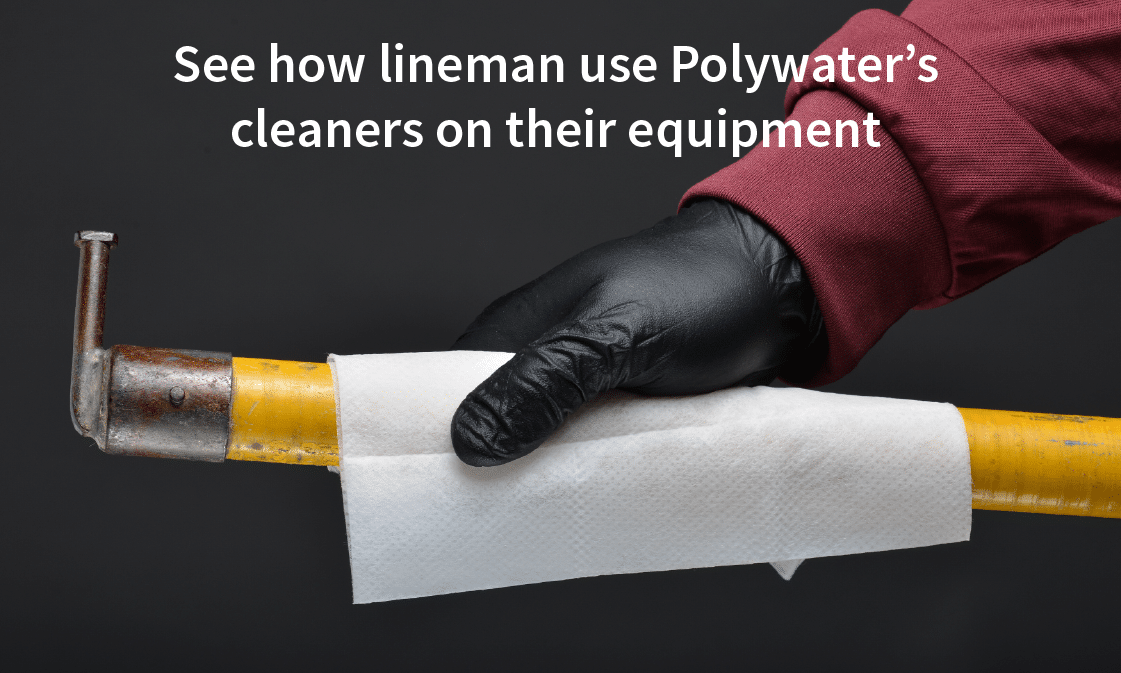
A hot stick only protects the crew if the surface is clean. Polywater says the best defense against accidents is a clean, glossy stick that causes water to bead up, and that a silicone layer prevents a continuous conductive water film in wet or humid weather.
| Source | Requirement |
|---|---|
| 29 CFR 1910.269(j)(2) | Wipe each live-line tool clean and visually inspect it for defects before use each day. If contamination or a defect that could affect insulating or mechanical integrity remains after wiping, take it out of service, then examine and test it before it goes back. Tools used for primary employee protection also come out of service at least every two years for a full examination, cleaning, repair and testing. If a defect is found, the tool is repaired and refinished or removed permanently. If none is found, it is cleaned and waxed |
| IEEE Std 978, Section 4.3 | Before each use, wipe with a clean absorbent towel, then a silicone-treated cloth. For stubborn contaminants, use denatured alcohol, then a silicone-treated cloth |
| IEEE Std 978, waxing | Wax only as needed to keep the surface glossy and water-beading, not after every use. Clean before rewaxing to prevent wax buildup |
| Product | What it does | Package |
|---|---|---|
| S-1 Hot Stick Cleaner and Water-Repellent Wipe | Removes grease, dust and grime and leaves a water-repelling silicone layer. Combines the alcohol and silicone-cloth steps in one wipe. Safe for gel coat. Meets IEEE Std 978 and OSHA 29 CFR 1910 guidelines | 8 x 12 in. wipe, 144 per case |
| W-1 Fiberglass Wax and Buff Kit | Carnauba-based wax restores luster and leaves a non-conductive, water-repellent coating. Does not affect gel coat | Wax wipe plus dry buffing towel, 72 per case |
Polywater says S-1 also helps telescoping sticks extend more easily and helps fiberglass rodders glide into conduits.
| Avoid | Why, per IEEE Std 978 |
|---|---|
| Detergent-type or abrasive household cleaners | They leave conductive residue unless rinsed with plenty of water, and abrasives destroy surface gloss |
| Cloths washed in harsh solvents | They can leave residue on the pole |
| Skipping the test after soap-type cleaning | IEEE 978 calls for electrically testing the tool under wetting conditions to confirm the residue is gone |
The same care applies to the attachments you put on the stick. See our hot stick types guide and hot stick attachments by job.
OSHA 1910.269(j)(2) requires wiping it clean and inspecting it before use each day. IEEE Std 978 says to wipe it before each use.
Only as needed to keep it glossy and water-beading, not after every use.
Polywater says it combines both in one step.
Contact Powertech Associates at info@powertech-upsc.com or (860) 678-8772.
Last updated: November 2026.
